Service Hotline
News
News

FFC vs FPC: How to Choose the Right Cable and Connector for Your Device
2025-12-11
195
Why It Matters
When designing compact electronics like smartphones, wearables, or smart cameras, every millimeter counts. FFC (Flat Flexible Cable) and FPC (Flexible Printed Circuit) are common solutions for internal connections. While they look similar, the right choice—and the matching connector—can make a big difference in reliability, assembly efficiency, and long-term device performance.
What’s the Difference Between FFC and FPC Cables?
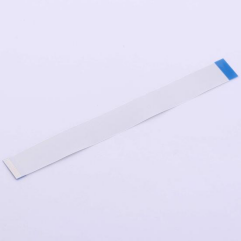
l FFC Cables: Simple flat cables with parallel conductive traces. Ideal for straight runs, like connecting a display to a motherboard. Common pitches: 0.5mm, 1.0mm, 1.25mm.
l FPC Cables: Flexible printed circuits on thin polymer substrates, often with complex shapes or multi-layer designs. Perfect for tight bends or custom layouts in compact devices.
Quick Take: FPCs are more flexible and customizable; FFCs are simpler and cost-effective for standard connections.
Why Connectors Matter
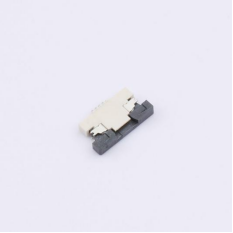
Cables alone can’t complete the connection. FFC/FPC connectors secure the cable to the PCB and ensure stable electrical contact. Common types include:
l ZIF (Zero insertion Force): Minimal force insertion, ideal for frequent assembly/disassembly.
l Non-ZIF: Simple push-in connectors, more cost-effective for permanent connections.
Tip: Choosing the wrong connector can lead to signal loss, misalignment, or premature wear—no matter how good your cable is.
Key Differences Between Cables and Connectors
l Role:
n Cable: Carries electrical signals between components.
n Connector: Provides a secure interface to the PCB.
l Flexibility:
n Cable: Can bend and fold as needed.
n Connector: Rigid and fixed on the PCB.
l Design Complexity:
n Cable: Simple straight traces (FFC) or custom complex layouts (FPC).
n Connector: Standard housing with locking mechanism.
l Installation:
n Cable: inserted into the connector.
n Connector: Mounted on PCB; may require locking or soldering.
l Failure Points:
n Cable: Breakage from excessive bending or wear.
n Connector: Poor contact or misalignment can cause signal issues.
Tips for Choosing the Right Combination
l Match pitch and size: Cable and connector must fit perfectly.
l Consider flexibility: FPC for complex bends; FFC for straight runs.
l Think about assembly: ZIF connectors for frequent handling.
l Check electrical specs: Signal integrity, current rating, EMI protection.
l Prioritize reliability: High-quality connectors reduce long-term failures.
Conclusion
FFC and FPC cables, paired with the right connectors, are essential for modern electronics. Understanding the differences helps engineers and procurement teams make smart choices that save time, reduce failures, and improve device performance. The right combination ensures better reliability, smoother production, and happier end-users.
Related Recommendations