Service Hotline
News
News

China’s MEMS Infrared Sensor Chip — Interview with ChipCreate Chairman Zhao Zhu
2025-10-11
252
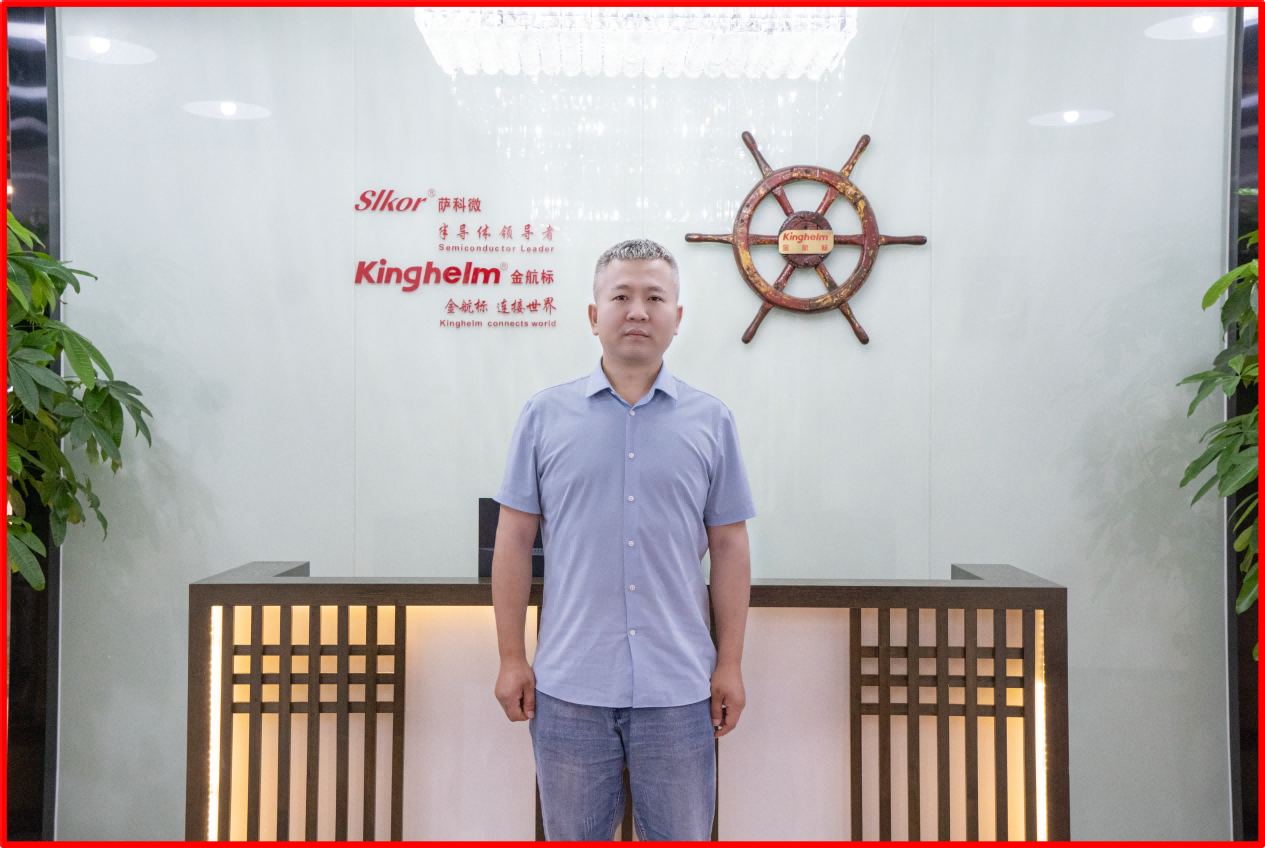
Zhao Zhu of ChipCreate and Lingmai Sensor Visits Kinghelm and Slkor Headquarters
In the rapidly evolving landscape of global semiconductor innovation, few players have captured attention as swiftly as ChipCreate Technologies and its subsidiary Lingmai Sensor. Built on a philosophy of “precision, depth, and service,” the company has dedicated more than 15 years to mastering one of the most technically demanding niches in sensing technology — MEMS-based infrared temperature detection.
Through relentless R&D and a vertically integrated service model, ChipCreate has successfully delivered high-performance, low-cost domestic sensor solutions that now replace products once dominated by European, American, and Japanese brands. Their clients include Midea, Fotile, Dreame, Moonlight Group, and Han’s Laser, among other leading consumer electronics and industrial manufacturers across China.
In this exclusive feature, Kinghelm Media sat down with Zhao Zhu, founder, chairman and CEO of both ChipCreate and Lingmai Sensor — a technologist-turned-entrepreneur whose academic discipline and industrial pragmatism have shaped one of the most promising sensor technology ventures emerging from China’s new semiconductor wave.
From Energetic Materials to Microelectronics: A Founder Forged by Intensity
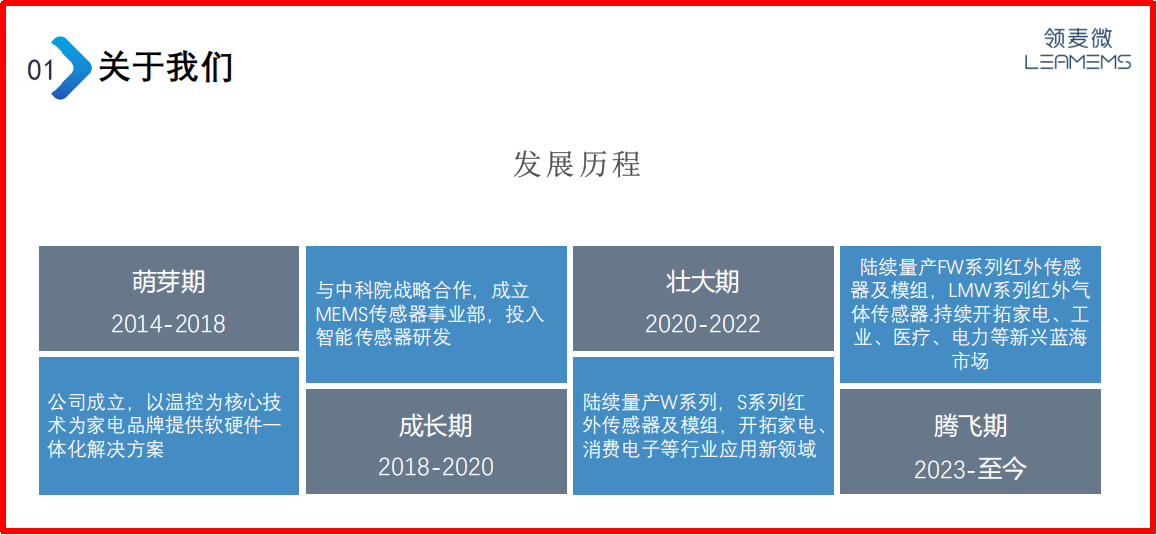
ChipCreate: A Decade of Technological Breakthroughs (2014–2023)
Born in 1981 in Liaoning Province, Zhao comes from a background far removed from semiconductors — yet defined by extreme rigor. He completed a seven-year combined bachelor’s and master’s program at North University of China, originally majoring in Safety Engineering with a focus on energetic materials (initiation, transmission, and destructive explosives) — where error margins mean life or death.
“Switching from energetic materials to microelectronics wasn’t just a change of discipline — it was starting from zero,” Zhao recalls. “Every day in the lab lasted 12 to 13 hours. Monthly research defenses tested not just our progress, but our resilience. That relentless pace cultivated an ability to persist long after most people would give up — and that is exactly what long-cycle semiconductor innovation requires.”
Founding Journey: From Studio Startup to National High-Tech Enterprise
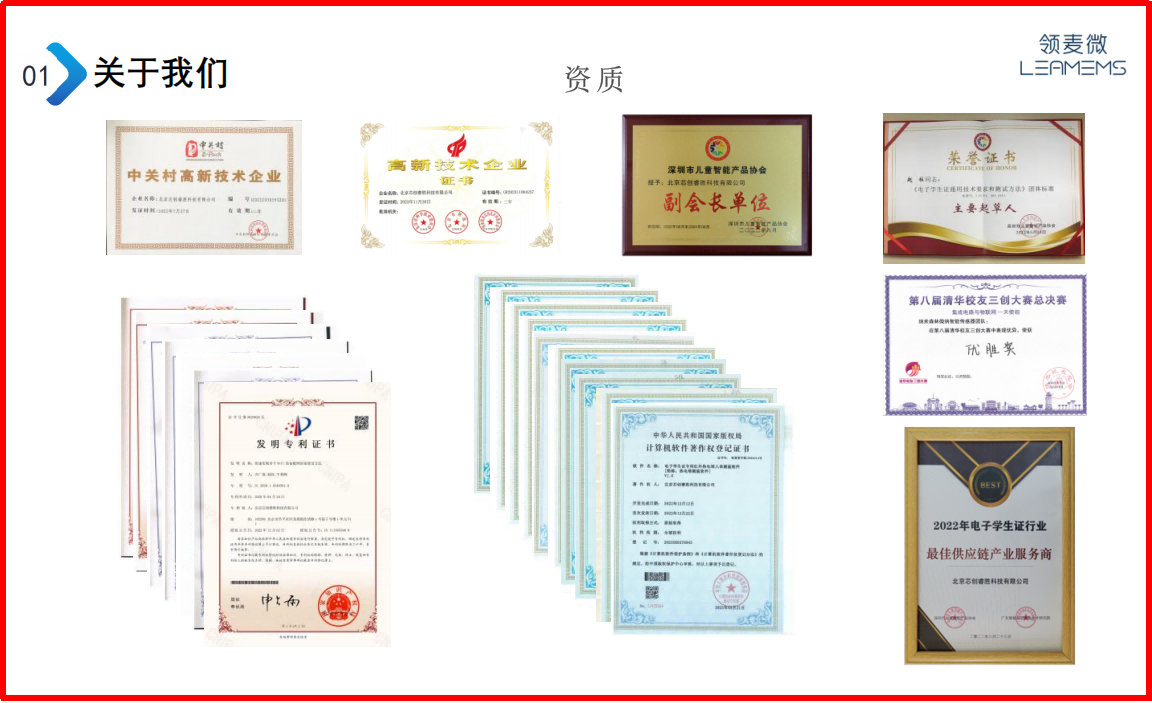
ChipCreate’s Certifications and Industry Recognitions
After graduating in 2007, Zhao worked for two years before launching an independent design studio in 2009. That informal group of like-minded engineers later evolved into ChipCreate Technologies, formally established in Beijing in 2014. Over the next decade, the company secured recognition as both a Zhongguancun High-Tech Enterprise and a National High-Tech Enterprise, earning credibility through real engineering achievement rather than marketing hype.
To accelerate market responsiveness and better serve downstream clients, Zhao expanded to southern China by founding Lingmai Sensor in Shenzhen in 2023 — positioning the company at the convergence of China’s innovation capital (Beijing) and manufacturing capital (Guangdong–Hong Kong–Macao Greater Bay Area).
Technology Stack: “Sensor + Algorithm + Product-Level Calibration” as a Core Engine
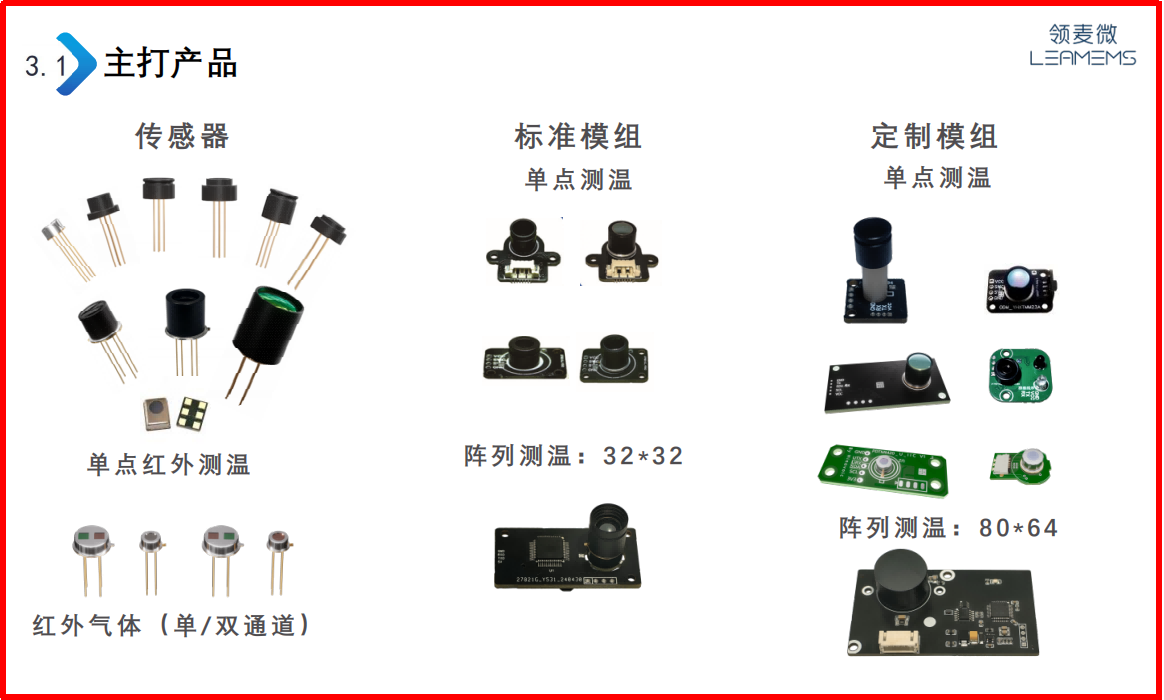
Flagship Products of the LeaMEMS Brand
Unlike traditional chip suppliers that simply sell wafers or packaged dies, ChipCreate operates under a full-stack application-oriented model, integrating:
l MEMS Infrared Sensor Chips
l Algorithm Libraries (Lib Functions)
l Product-Level Calibration and Validation Routines
l Custom Sensor Modules and Complete Solutions
This approach aligns with Zhao’s philosophy: “We don’t just sell sensors — we deliver functionality.”
Their leading brands, LeaMEMS and LinKon, directly compete with — and in many cases replace — global names such as Melexis (Belgium), Heimann Sensor (Germany), Excelitas (USA), and Nicera (Japan).
Market Positioning: A “1-Centimeter Wide, 1-Kilometer Deep” Strategy
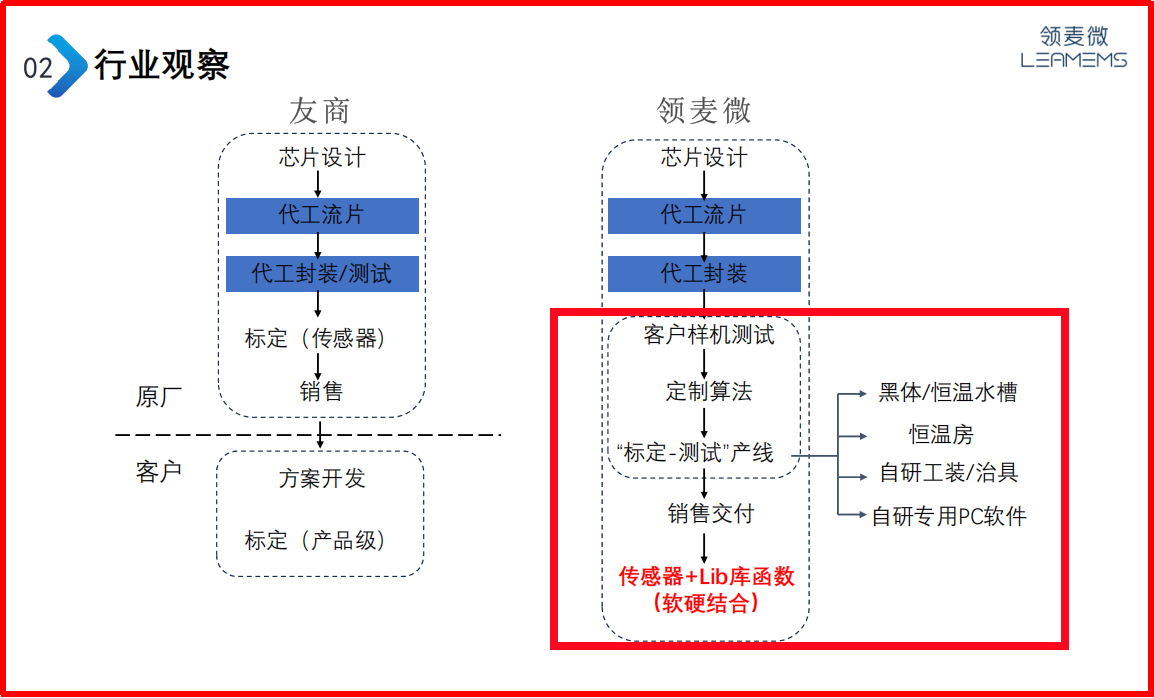
LeaMEMS’ Innovative Customer Service Workflow
Zhao rejects the conventional startup pursuit of broad diversification. Instead, he promotes a vertical specialization strategy:
“In this industry, technology spans hardware, optics, materials, thermodynamics, and application environments. If you spread yourself too thin, you never master any layer. Our goal is to focus on a narrow segment — and go infinitely deep.”
This mindset has produced solutions with high repeatability, low replacement risk, and strong IP defensibility, giving ChipCreate pricing power and bargaining leverage in a sector notorious for commoditization.
Service Model: Breaking Industry Convention with Full Lifecycle Support
Unlike typical sensor vendors who outsource calibration and leave integration to customers, ChipCreate operates a factory-level calibration and validation line equipped with:
l Blackbody Radiation Sources
l Constant-Temperature Water Baths
l Controlled Thermal Chambers
l Custom Fixtures and In-House Software
Their five-step engagement process includes:
l Customer Sample Testing (Thermal Profile Extraction)
l Algorithm Customization (Embedded into Lib Functions)
l Calibration & Production Validation (Ensuring Field Accuracy)
l Delivery & Mass Supply
l Ongoing Sensor + Software Library Support
This model radically lowers clients’ engineering burdens — achieving what Zhao calls “plug-and-deploy sensing”.
Industry Insight: “Domestic Substitution Is Rising — But So Are the Challenges”
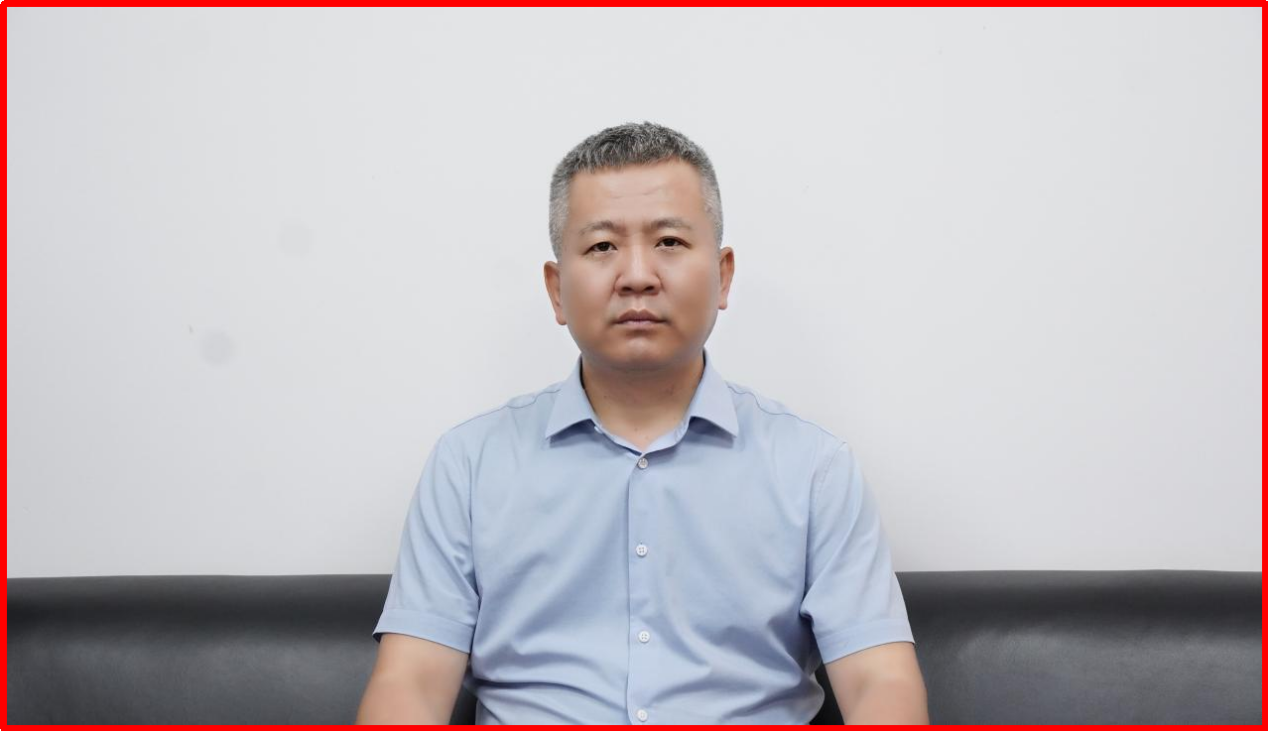
Zhao Zhu: Building China’s Next-Generation Strength in MEMS Infrared Sensing
Zhao is candid about market realities.
“Yes, domestic replacements are accelerating. But with that comes overcapacity, price compression, and homogenization. Real innovation now requires understanding not just chips, but complete application behavior. That’s why we insist on owning both the sensor and its algorithm.”
He also warns against short-sighted opportunism.
“This is a hard road. If you expect quick wins, you shouldn’t be in semiconductors. We chose the steep path deliberately — to build something foundational, not transactional.”
Looking Forward: Engineering a Global Competitor From China
With China consuming more than 50% of the world’s sensor demand, structural advantages are clear. What was once foreign-dominated technology is now being rebuilt from within. For Zhao and his team, the mission is not merely commercial — it’s strategic.
“The world doesn’t need another assembler. It needs original sensor companies with defensible core technologies. That is the role we intend to play.”
ChipCreate and Lingmai Sensor — together with fellow semiconductor innovators Kinghelm and Slkor — are not just component suppliers, but category definers. Representing a new wave of full-stack MEMS and RF sensing pioneers built entirely within China, these companies are proving that technological leadership does not require imitation. It requires persistence, engineering depth, and the courage to build from first principles.
Related Recommendations